
Our Governance and Finance
Board of Directors of The ITSCI Organisation
Our Board of Directors provides strategic direction and leadership to support the achievement of The ITSCI Organisation’s mission and is responsible for the governance, management, and executive oversight of the ITSCI Programme.
The Board is composed of five Directors who bring diverse experience from industry, the private sector, NGOs, and international organisations: four Non-Executive Directors and The ITSCI Organisation’s CEO who will also act as Executive Director.
Directors are listed in alphabetical order.
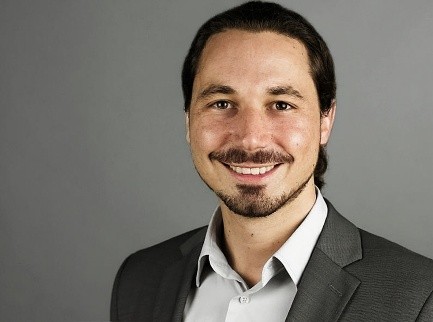
Mickaël Daudin, Executive Director and Chief Executive Officer (CEO)
Mickaël Daudin has been working on the ITSCI Programme since 2015, including as ITSCI Programme Manager since 2022. During this time, he has played a central role in the development, scale-up, and ongoing strengthening of the ITSCI Programme. His work has focused on improving alignment with international due diligence standards, maintaining effective programme implementation in complex operating contexts, and supporting continuous improvement in governance and oversight. Prior to his appointment as Programme Manager, he spent 7.5 years working directly on field implementation of the ITSCI Programme, leading reporting activities as well as managing and training field and reporting teams, giving him first-hand insight into operations at field level.
“Having been closely involved in preparing ITSCI for its transition to a stand-alone legal entity, I am proud to see the tangible progress now being achieved. Since joining ITSCI more than 10 years ago, I have spent extensive time supporting our on-the-ground operations, working alongside our field teams, and engaging with valued partners and stakeholders across the Great Lakes Region and internationally. This transition as well as the appointment of a Board of Directors is an important milestone for ITSCI, and I look forward to working with the Board, our teams, and stakeholders to build on this momentum and continue advancing ITSCI’s mission.”

Carrie Mae George, Non-Executive Director
Carrie Mae George is a senior advisor with extensive experience in responsible mineral sourcing, supply chain due diligence, and multi-stakeholder governance. Her career spans Fortune 500 companies, private equity-backed organizations, and U.S. government service, where she has designed and overseen due diligence systems for over 40 materials and minerals, with responsibility for supplier engagement, incident and grievance mechanisms, and multi-jurisdictional transparency reporting. Carrie has conducted field work in high-risk regions including the DRC, Rwanda, China, and Indonesia, visiting mining sites and smelter facilities to build relationships and capability across 30 countries. She has advised industry associations and multi-stakeholder initiatives on transparency and impact improvement. She served as OECD Mineral Risk Expert, CFSI Steering Committee founding member, and has overseen in-region risk and development programming as Grant Manager and Endowment Founder. Carrie holds an MPA from Cornell University.
“Having been involved in ITSCI’s early transparency efforts, I am eager to join the Board as the organization transitions to independence. This evolution allows ITSCI to build on its traceability foundation while maintaining rigorous alignment with and strengthening its focus on the human rights impacts outlined in the OECD Due Diligence Guidance and with Annex II risk mitigation. With this strengthening, we can better translate continuous improvement goals into tangible impact for communities at the beginning of the supply chain.”
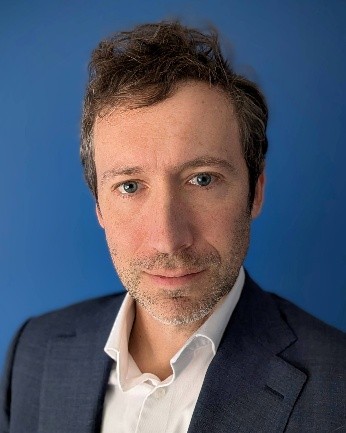
Michael Jobbins, Non-Executive Director
Mike Jobbins joins the ITSCI board with twenty years of experience in civil society, conflict resolution and human rights. He is Senior Advisor at Search for Common Ground and previously led conflict resolution and civil society efforts in the Democratic Republic of Congo and Burundi. Mike managed efforts to improve transparency, reducing security force abuses, and promoting community development in mineral-rich areas. He has spoken widely on conflict and human rights issues in the Great Lakes in international media outlets and public forums. He has testified and briefed the U.S. Congress, U.N. General Assembly, and U.K. parliament on human rights and conflict resolution in Africa. Mike is active within multistakeholder processes and chaired the NGO pillar of the Voluntary Principles on Security and Human Rights. Mike holds a Masters from Georgetown and Bachelors from Harvard University.
“After 15 years of industry-leading work, ITSCI’s evolution into a stand-alone legal entity marks a significant milestone. It also comes at a pivotal moment in responsible minerals and the Great Lakes Region. I am looking forward to working with the rest of the Board, staff and all stakeholders to advance the core mission: preventing conflict and human rights abuses, and supporting responsible supply chains coming from this region.”

Sonia Marsh, Non-Executive Director
Sonia Marsh is the Deputy Head of Sustainability at the International Tin Association (ITA) where she manages its sustainability initiatives including the Tin Code and responsible sourcing programme. A specialist in international law, her background includes previous roles with a non-profit human rights foundation and a UN-accredited fashion brand. She has also served on independent governance boards including representing the supply chain actor pillar on the Governing Board of the European Partnership for Responsible Minerals (EPRM), which supports ASM projects in conflict-affected and high-risk areas.
“I’m honoured to join the Board of Directors of the newly independent, not‑for‑profit ITSCI organisation. Having worked across the tin sector, I have gained a deep appreciation for this region’s significance to global supply and I look forward to sharing that practical knowledge to our shared goals. Working alongside fellow directors, I look forward to strengthening ITSCI’s independent governance and ensuring we continue to provide transparent information and rigorous due‑diligence support for responsible sourcing in conflict‑affected and high‑risk areas.”
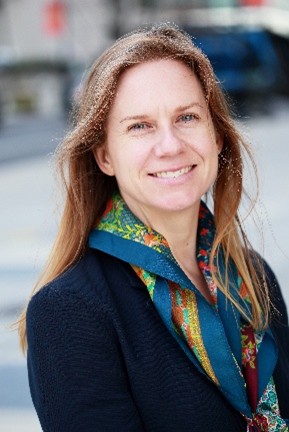
Dr Rachel Perks, Non-Executive Director
Dr Rachel Perks is an experienced mining professional with a 20+ year career serving governments and private sector industry. Her career has spanned working and living in jurisdictions across the Horn, central and east Africa with a focus on building public-private partnerships for sustainable outcomes in the mining industry. Her passion lies with the artisanal and small-scale mining (ASM) sector where she has delivered successful ASM programs for governments and the mining industry with an objective to improve Environmental Social Governance (ESG) performance. She has been instrumental in elevating the importance of ASM in the international development agenda through her decades of published writing and is considered a leading expert in the domain.
“I am looking forward to supporting ITSCI as it embarks on this next phase of its journey to support sustainable and responsible artisanal and small-scale mining (ASM)”
Our Funding
The ITSCI Programme is in majority funded by the upstream supply chain and typically represents 95% or more of annual funding, while contributions from the downstream sector represent less than 1%. From 2017, ITSCI has been sustainably funded by the upstream mineral sector only, without any external donor support. We also occasionally benefit from partial donor funding, particularly directed at achieving specific aims in specific locations.
Levies contributed by the upstream sector which relate to mineral type and trading volumes are our most important source of funds. These are collected at an appropriate point in the supply chain depending on commercial agreements, business structures and trade financing.
Full member joining and annual fees is another type of funding contributed by the upstream sector although these are kept low and at a different level based on the company type and position in the supply chain, aiming to ensure inclusivity and provide the opportunity for companies of all size to participate without any financial barrier. Mining companies and cooperatives may participate in the ITSCI Programme without formally joining as Full Participants, allowing them to benefit from ITSCI activities, including traceability, at no cost.
Initial fixed payments are sometimes invested by upstream mineral trading companies to enable set-up of ITSCI in new mining areas.
Associate member annual fees paid by downstream member companies to receive timely information on the supply chain, also contribute to ITSCI’s operational costs.
The ITSCI Organisation, which administers the ITSCI Programme as its Secretariat, is an independent UK not-for-profit Company Limited by Guarantee (CLG).
The use of all funds received by the ITSCI Organisation are locked by its Articles of Association for the purpose of administering the ITSCI Programme to promote responsible sourcing of minerals, including tin, tantalum, and tungsten, from Conflict-Affected and High-Risk Areas. Any surplus funds collected in any one year are maintained in The ITSCI Organisation account balance reserve for later use.
Our Expenses
The vast majority of our funds, around 80%, are spent in our implementation areas to provide much needed technical expertise, transport and communication. Another 10% is essential to implement traceability while the remaining 10% of our expenses relate to a combination of administrative, evaluation, auditing and governance activities.
Field implementation expenses are incurred by the field teams and their local offices who also require other essentials such as tags, transport, data transfer and communication equipment and services. Risk identification and management, whistleblowing hotlines and other costs are also budgeted in the field.
Traceability and data collection, verification and management expenditure enables reporting of mineral sources to smelters, as well as identification of anomalies and the need for improved procedures. Digital data systems and online storage require continual updating and investment.
Evaluation and auditing expenses reflect travel to our members in all locations of the world.
ITSCI management includes all administration, financing, legal, translation, membership management and similar activities.
All ITSCI activities and expenses are driven by the expectations of activities and expectations set out in the OECD Guidance. We also carry out extensive training and capacity building work that would more typically be funded as donor programming.
Our Reporting and Finances
Our audited funding and expense figures are published each year in our annual reports. Visit our reporting page to view our recent annual financial reports, as well as a summary of funding, expenses and ongoing cash reserve by year.